Robotic surgery, also known as robotic-assisted surgery, is an advanced form of minimally invasive surgery where a surgeon performs the procedure using robotic instruments controlled through a specialized console. Despite its name, the robotic system does not make decisions or perform surgery on its own — every movement is directed entirely by the surgeon.
Unlike conventional surgery, robotic-assisted procedures provide exceptional precision, flexibility, and enhanced visualization of the surgical area. This allows surgeons to perform complex procedures through very small incisions while protecting surrounding healthy tissues.
For patients seeking treatment from a qualified robotic surgeon in Pune, robotic surgery offers an effective option for several general, gastrointestinal, and hernia-related conditions.
Traditional open surgery usually requires a larger incision to access the affected organ. While highly effective, larger incisions may result in increased pain, longer hospital stays, and extended recovery. Robotic-assisted surgery differs in several ways:
These advantages make robotic surgery a preferred option for suitable candidates whenever clinically appropriate.
One of the biggest misconceptions is that robots perform surgery independently. In reality, the surgeon remains in complete control throughout the entire procedure. The robotic system simply translates the surgeon's hand movements into highly precise movements of miniature surgical instruments — every decision, movement, and adjustment is made by the operating surgeon.
Choosing an experienced robotic surgeon in Pune ensures that advanced technology is combined with surgical expertise to deliver the safest possible care.
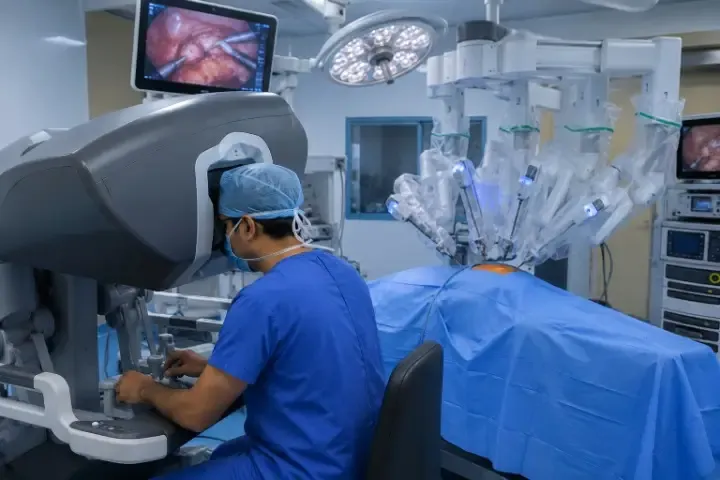
Robotic-assisted surgery combines advanced imaging technology with precision-controlled surgical instruments.
The surgeon sits comfortably at a computerized console that provides complete control over every surgical movement.
Specialized robotic arms hold delicate surgical instruments that replicate the surgeon's hand movements with remarkable precision.
A tiny high-definition camera provides a magnified three-dimensional view, improving visualization of delicate anatomical structures.
Miniature instruments are capable of movements beyond the flexibility of the human wrist, enabling greater accuracy during complex procedures.
Throughout the operation, the robotic system responds instantly to the surgeon's commands, assisting but never replacing clinical judgment.
Robotic-assisted surgery is used across several surgical specialties.
An experienced robotic surgeon in Pune carefully evaluates every patient to determine whether robotic surgery is the most suitable treatment option.
Robotic-assisted surgery provides several advantages for eligible patients.
Tiny incisions reduce tissue damage and often result in less discomfort after surgery.
Improved precision helps minimize bleeding, reducing the likelihood of blood transfusions.
Less trauma to surrounding tissues means patients often need fewer pain medications.
Smaller wounds generally reduce the chance of postoperative infections and promote healing.
Many patients recover more quickly and resume daily activities earlier than after open surgery.
Hospital admission is often shorter, allowing patients to recover comfortably at home.
Robotic technology enhances surgical accuracy, particularly during delicate procedures.
Smaller incisions usually leave minimal scarring, leading to improved cosmetic outcomes.
Not every patient requires robotic surgery. Suitability depends on multiple medical factors. Doctors generally evaluate:
A consultation with a qualified robotic surgeon in Pune helps determine whether robotic-assisted surgery is the best treatment option.
Recovery varies depending on the type of surgery, overall health, and individual healing capacity.
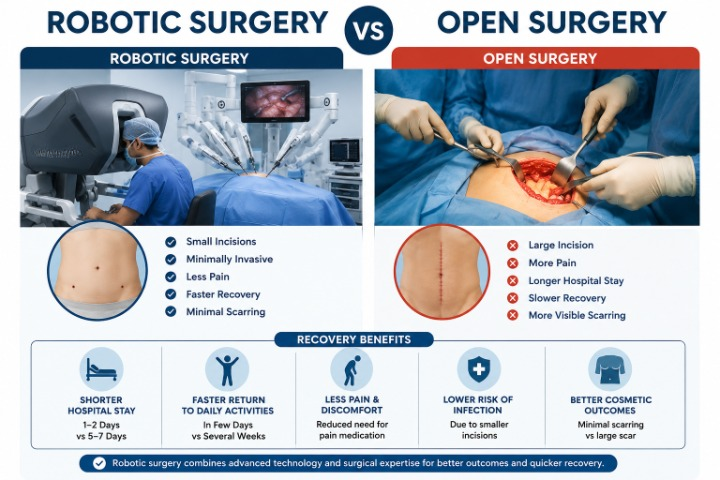
Many patients are discharged within one or two days, although some procedures may require longer observation.
Postoperative discomfort is generally manageable with prescribed medications and gradually improves over several days.
Patients with desk jobs may return to work sooner, while physically demanding occupations may require additional recovery time.
Light walking is usually encouraged soon after surgery. A balanced diet, adequate hydration, and following medical advice support faster healing.
Follow-up visits allow the surgeon to monitor recovery, assess wound healing, and address any concerns.
Most patients gradually resume normal daily activities within a few weeks, depending on the complexity of the procedure.
| Feature | Robotic Surgery | Open Surgery |
|---|---|---|
| Incision Size | Small | Large |
| Pain | Usually less | Usually more |
| Blood Loss | Lower | Higher |
| Infection Risk | Lower | Higher |
| Hospital Stay | Shorter | Longer |
| Recovery | Faster | Slower |
| Scar Size | Minimal | Larger |
Robotic surgery is widely accepted as a safe and effective treatment option when performed by trained and experienced surgeons. Several factors contribute to its safety:
Clinical studies have shown excellent success rates and positive patient outcomes for appropriately selected cases.
Robotic surgery is a minimally invasive procedure where the surgeon controls robotic instruments to perform highly precise operations through small incisions.
Yes. It is considered safe when performed by an experienced and properly trained robotic surgeon.
No. The surgeon controls every movement of the robotic system throughout the procedure.
Most patients experience less pain compared to traditional open surgery because the incisions are much smaller.
The duration varies depending on the type and complexity of the procedure.
Many patients recover faster than with open surgery, although recovery depends on the specific operation and overall health.
Benefits include smaller incisions, less blood loss, reduced pain, faster recovery, lower infection risk, shorter hospital stay, and greater surgical precision.
Both are minimally invasive techniques. The best choice depends on the patient's condition and the surgeon's clinical assessment.
Suitable candidates are determined after evaluating medical history, overall health, and the condition being treated.
Like any surgery, robotic procedures carry risks such as bleeding, infection, anaesthesia-related complications, and blood clots, although serious complications are uncommon.
Robotic surgery represents a significant advancement in modern surgical care, offering greater precision, smaller incisions, reduced pain, and faster recovery for many patients. While not every condition requires robotic-assisted surgery, it has become an effective treatment option for various hernia, gastrointestinal, bariatric, and general surgical procedures.
If you are considering treatment from an experienced robotic surgeon in Pune, consult a qualified specialist who can evaluate your condition, explain your treatment options, and recommend the most appropriate surgical approach based on your individual healthcare needs.